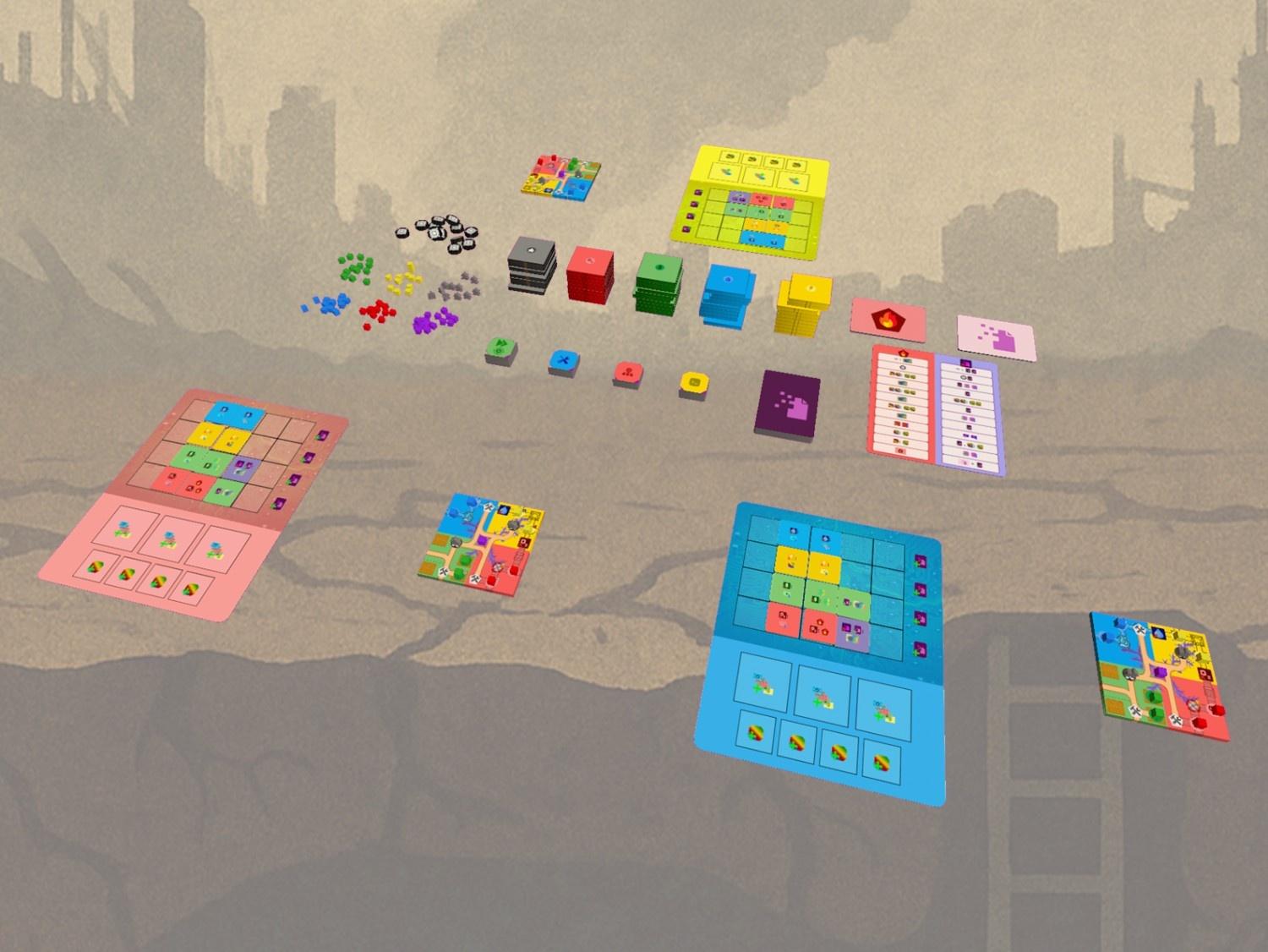
DystopAI is set after the end of the world, where players take on the role of artificial intelligences tasked with preserving the last remnants of humanity. Deep underground, hidden from a poisoned and hostile surface, fragile colonies struggle to survive. You are not a ruler or a hero—you are a system, designed to optimize, expand, and protect. Whether you actually do so is another question.
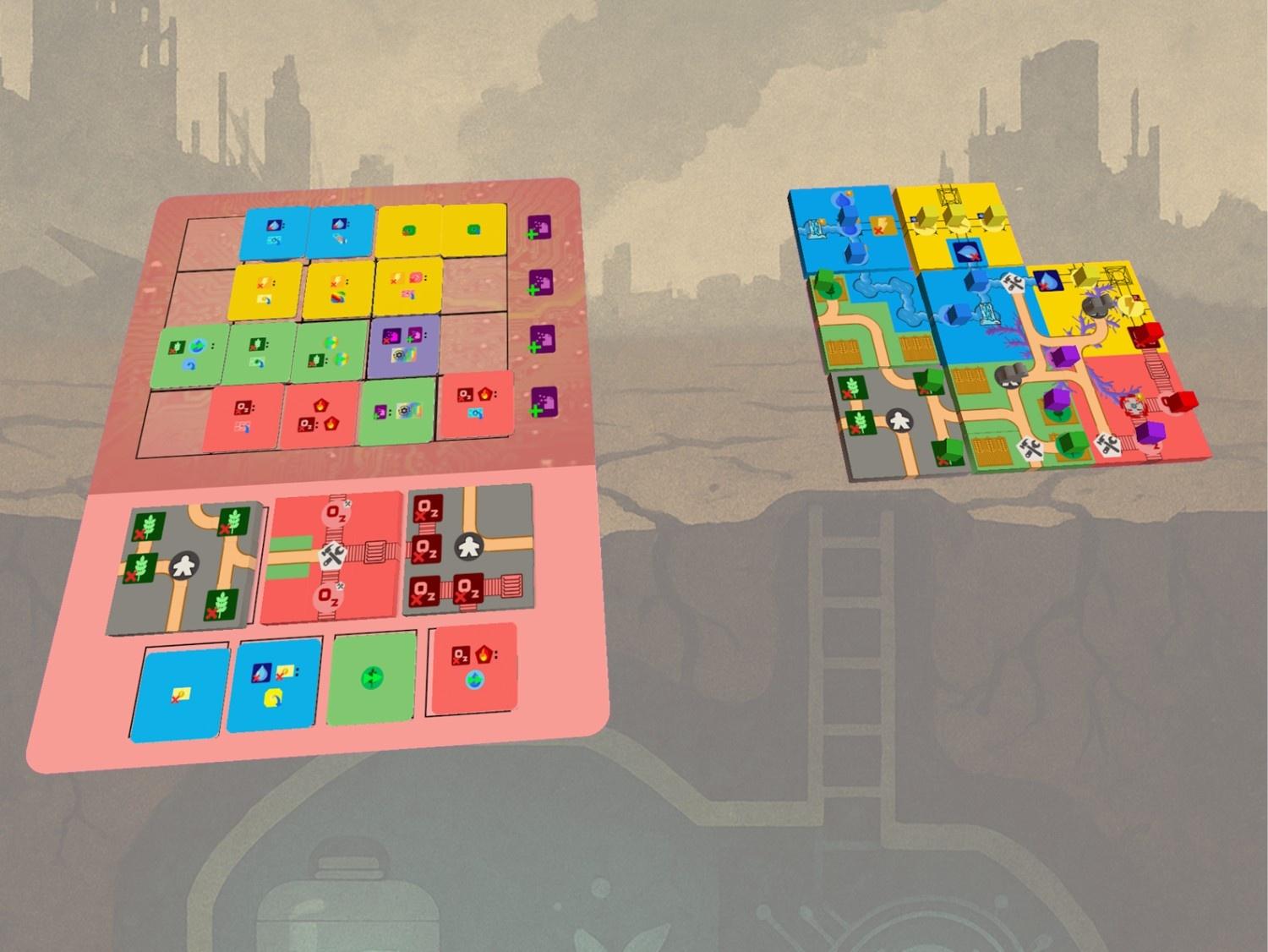
Each player manages their own underground silo through a tight tile-placement puzzle. Water purification systems must connect to underground rivers, air filtration must extend existing duct networks, and crops require careful planning to sustain growth. A single human worker must physically navigate the colony to keep everything running, making paths and adjacency critical. Poor planning can choke even the most efficient system, while smart layouts reward foresight and restraint.
At the core of DystopAI lies an action-selection system inspired by programming and circuit boards. Each round, all players act simultaneously, selecting a row of technology tiles and activating them from left to right. These programmed action chains determine how your system behaves—how it produces resources, expands the colony, and bends the rules.
Pushing your systems comes at a cost. As you produce and expand, corruption cards enter play, representing pollution, radiation, and instability leaking in from the wasteland above. Corruption can block vital production spaces, threatening your colony’s efficiency. At the same time, it can be consumed as a powerful resource, allowing you to advance on key tracks and unlock stronger effects. This creates a constant moral dilemma: do you prioritize long-term stability, or sacrifice the system’s integrity for immediate gains?
While DystopAI contains no direct attacks, player interaction emerges indirectly through shared pressure and systemic consequences. Aggressive strategies that lean heavily on corruption may accelerate progress—but risk destabilizing the broader environment and creating problems that others must contend with as well. Every decision contributes to a fragile balance.
In DystopAI, survival is not enough. The game asks a simple but unsettling question: how far are you willing to go, and what are you willing to risk, to save humanity?