The Duke is dead, and so too is his chosen heir. You, his remaining children, return home to mourn and settle a dispute: with no clear succession order, you must prove yourself the most suitable to inherit the title. Yield: the Rightful Heir is a 1v1 strategy game of resource management, tactical movement, and area control. One will succeed. The other must yield.
Presentation
Duration: 2-3 hours
Player count: 2
Language: English
In Yield: the Rightful Heir, you gradually take control over the region while trying to maintain your supporters’ trust. By gathering support with the locals, by honouring the memory of your beloved father, by clandestine deals, or by good old brute force, one inheritor will emerge victorious while the other will be of interest only to historians.
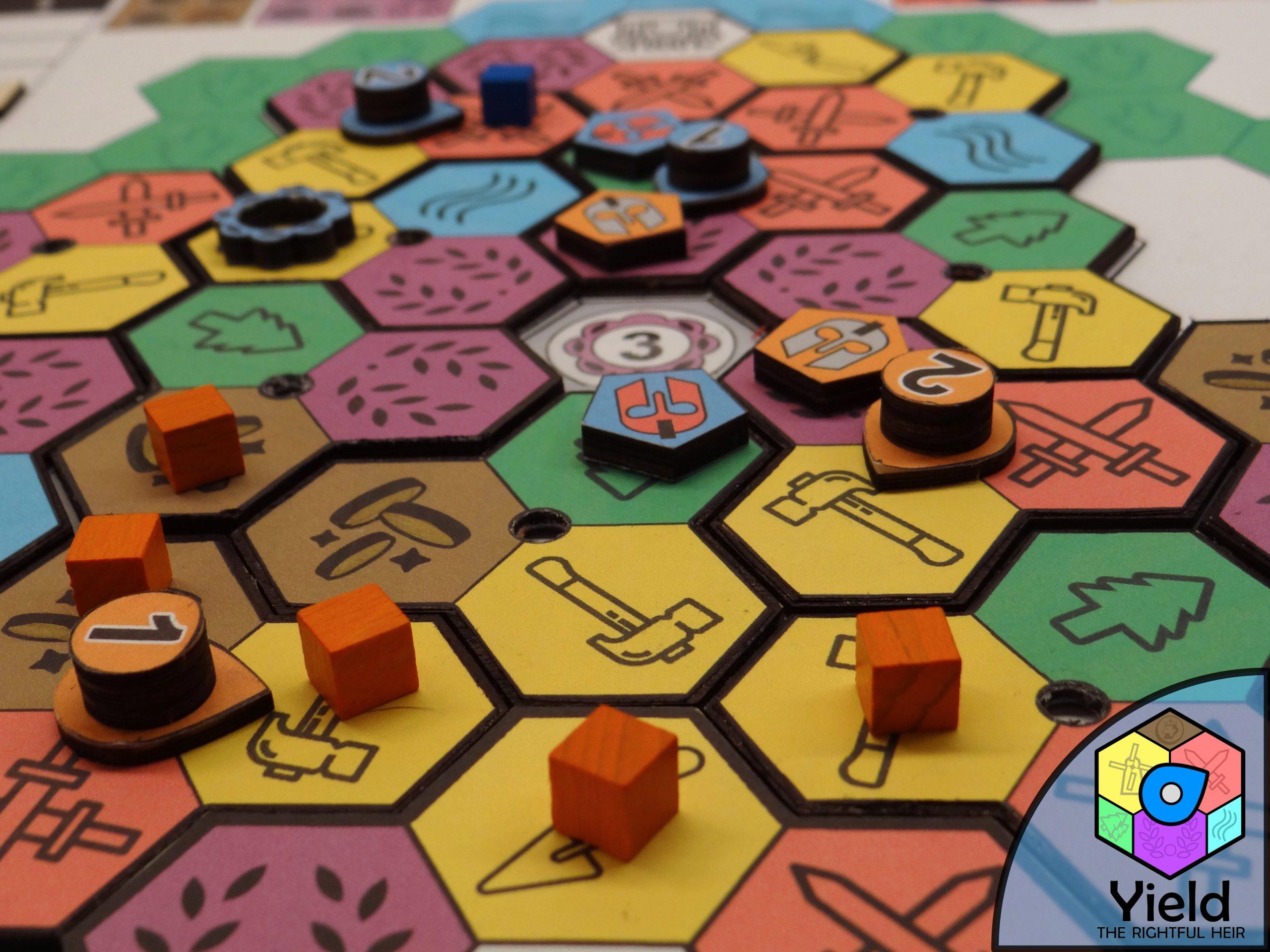
Each round is played in two phases: first both players act with all their units, then both players act with all their towns. This creates an ebb and flow between buildup and release, between action and reaction, sometimes to explosive effect.
Whoever explores the map gets to determine its layout, affecting both the road networks and production capacities. To make use of these opportunities, you’re always tempted to rally more towns to gain more actions. Each town also has a unique feature that helps you hone your strategy. But each town you rally increases the demands of your supporters. If you cannot meet those demands, their trust in you will deteriorate and inevitably collapse. Mastering this balance between immediate gain and long-term security is key to winning.
When producing resources, you put them onto the game board, blocking the board from generating more until you spend the resource. This turns production into a choice between income or area control: a well-placed cube could cut off your opponent’s profits, but only so long as you do not use it. Not to mention that a resource on the board is a tempting target for your opponent to march in and destroy or profit from.
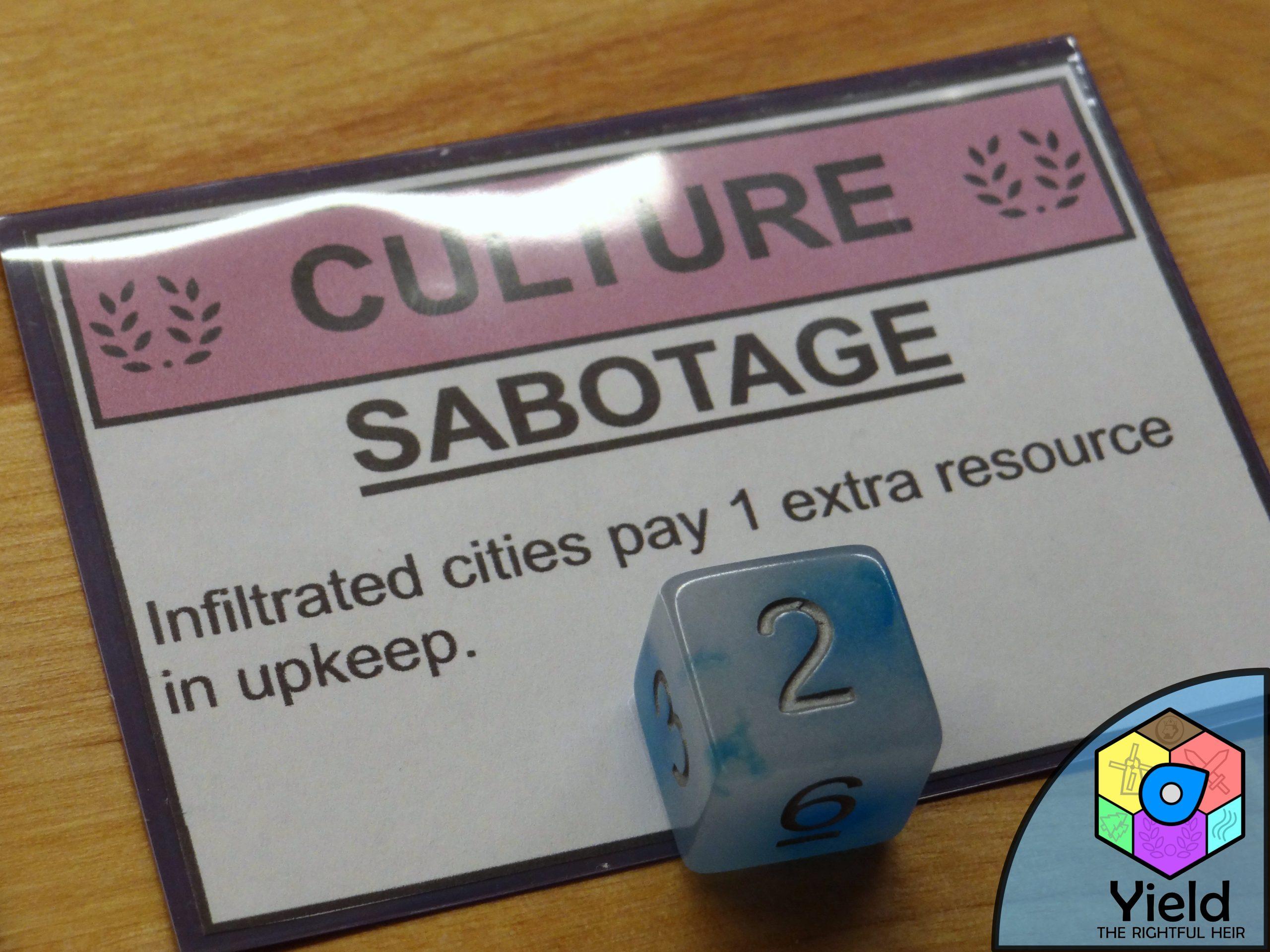
Conflict in Yield is resolved through betting resources. This can make conflict quite costly, and soon players opt for positioning and pressure in a dance of deterrence while they swipe resources away from each other. The threat of conflict can be just as scary as the real thing.
About the designers
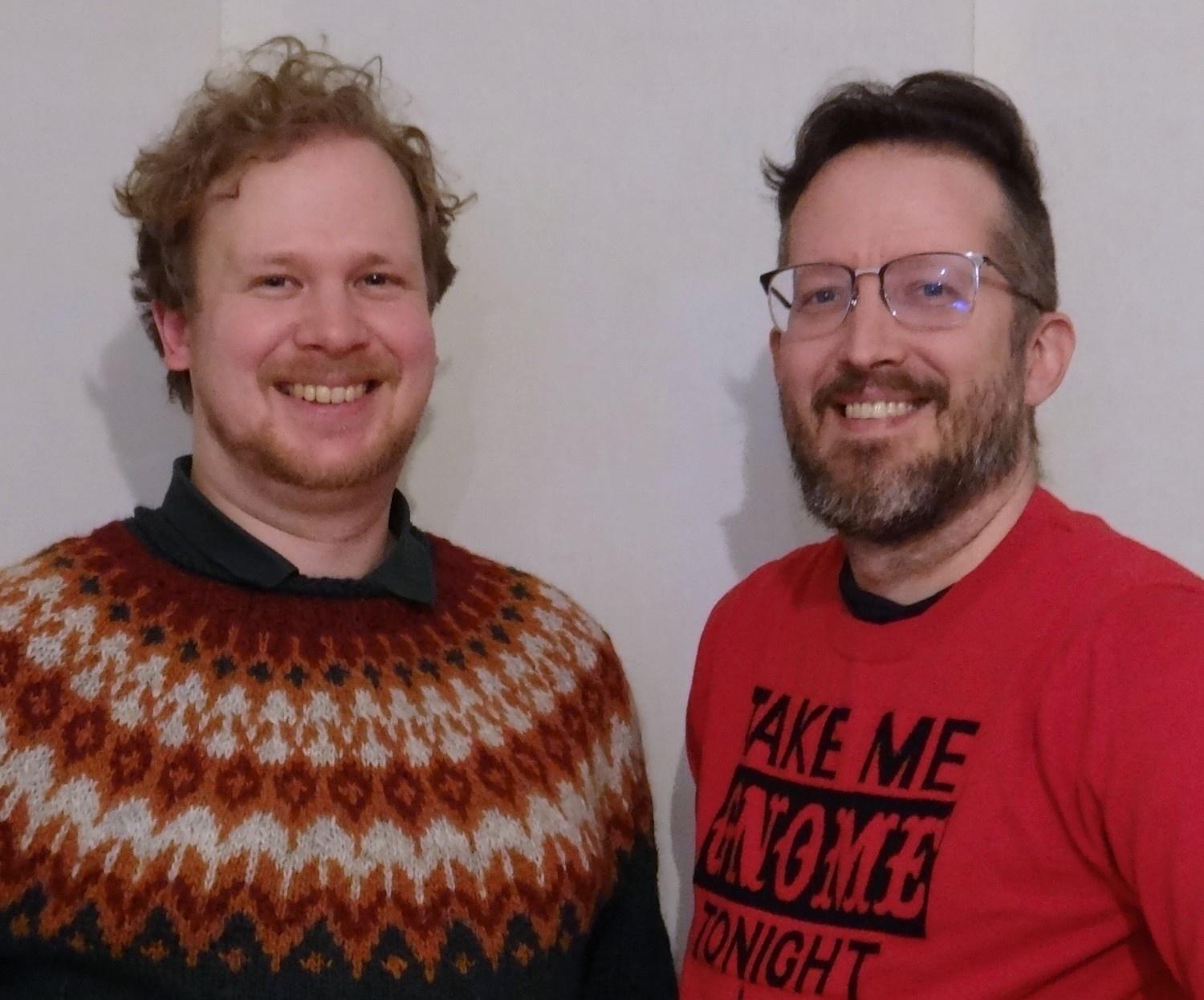
We are two oddballs who met while teaching a course in board game design, and quickly bonded over lack of sleep and bad jokes. This is our first time at Fastaval; we’re so excited!
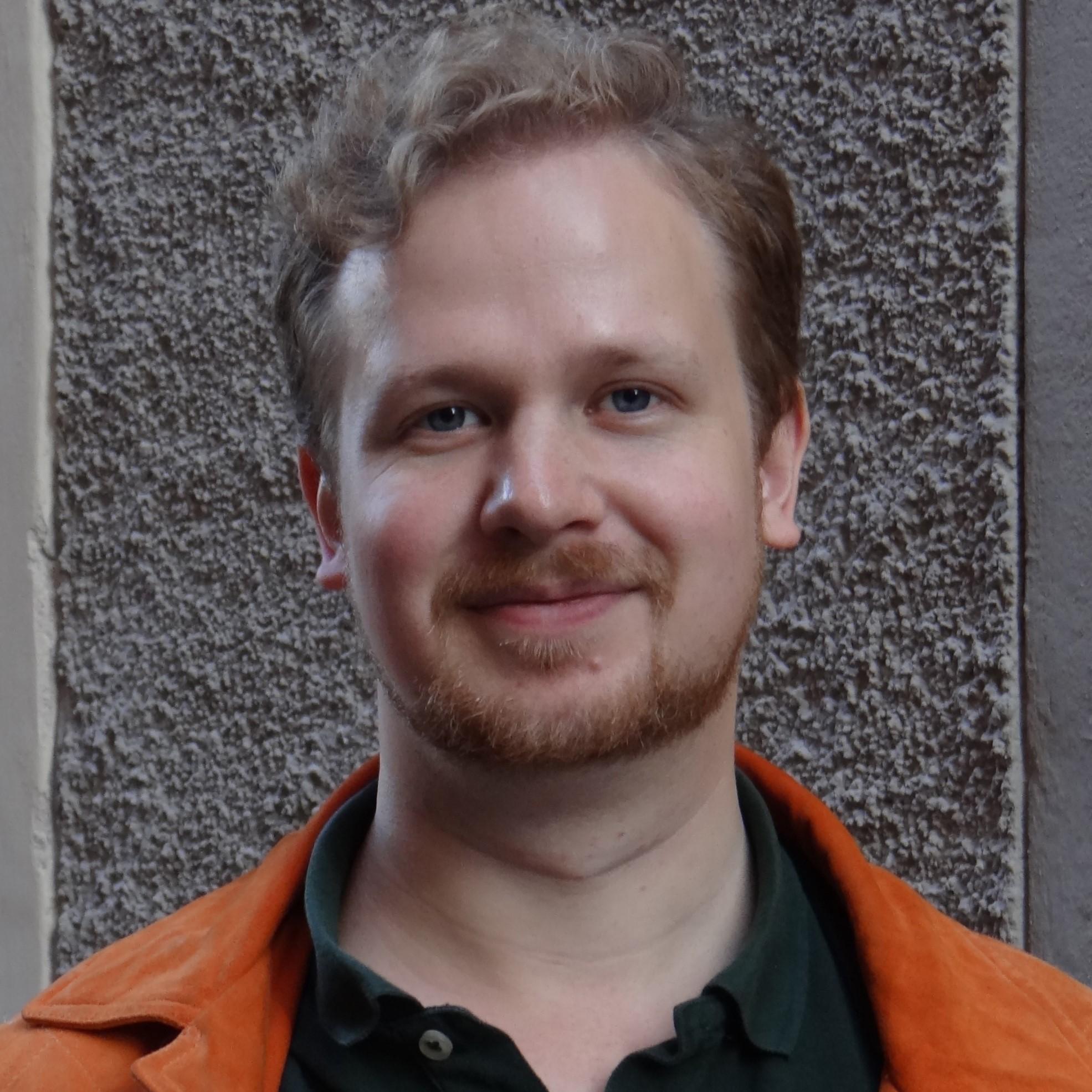
Adam Bontrager hails from the US but is currently squatting in Stockholm. He is an interactive designer and creates books of original logic puzzles through Sunome Puzzles, an indie puzzle studio he founded in 2022. In the past, Adam has worked as an Exhibition Designer for fine art museums to design interactive and gallery exhibits as-well-as a course leader for Future Games.
Anders Sivertsson is just as dry and stuck up as you expect a Stockholmer to be. He’s quiet sometimes, we promise, but most of the time he’ll talk your ear off about how to define what is or isn’t a game, or explore some random tangent in a verbal stream-of-consciousness. Oh, and he is an interaction designer, he’s taught game design, and he studied collaborative games as his thesis at some point. He loves playing Draw Steel and thinks you should, too.